
More and more clients are asking for visible results without surgery, without downtime and without needles. For salons and beauty institutes that is an opportunity: a well-structured offering around body contouring in your salon attracts new audiences and increases the average spend per client. The challenge lies in the choice. To the outside world, cryolipolysis, EMS and vacuum sound like the same story, but they are three different technologies that each tackle a different problem. Those who understand the differences build a treatment menu that makes sense and invest in equipment that fits it.
In this overview we put the three principles side by side: how they work, which client they suit and what you, as an entrepreneur, should look out for when purchasing.
What falls under body contouring, from cryolipolysis to vacuum?
Body contouring is an umbrella term for non-invasive treatments that improve the body’s contour. This can be done in three ways: by targeting fat cells, by activating muscle tissue, or by making the skin and connective tissue firmer and smoother. Most clients arrive with a combination of wishes, think of a flatter stomach, less cellulite on the upper legs or firmer skin after weight loss.
Important to be clear on beforehand: none of these techniques is a substitute for healthy weight management, and you always communicate results realistically. Body contouring works best for clients with a stable weight who want to refine stubborn zones. It is precisely that level-headed, professional attitude that suits a salon aiming to work with satisfied clients over the long term.
Cryolipolysis: targeted fat reduction through cooling
Cryolipolysis, popularly also known as fat freezing, works on the basis of controlled cooling. Fat cells are more sensitive to low temperatures than the surrounding skin and tissues. By cooling a treatment zone over an extended period, fat cells are prompted into a natural breakdown process, after which the body gradually removes them. The skin, nerves and muscles are spared in the process.
This technique is suitable for clients with clearly defined fat deposits, such as a belly, love handles, the upper legs or a double chin. It is not a slimming treatment for the whole body, but a targeted approach to zones that are hard to shift with diet and exercise.
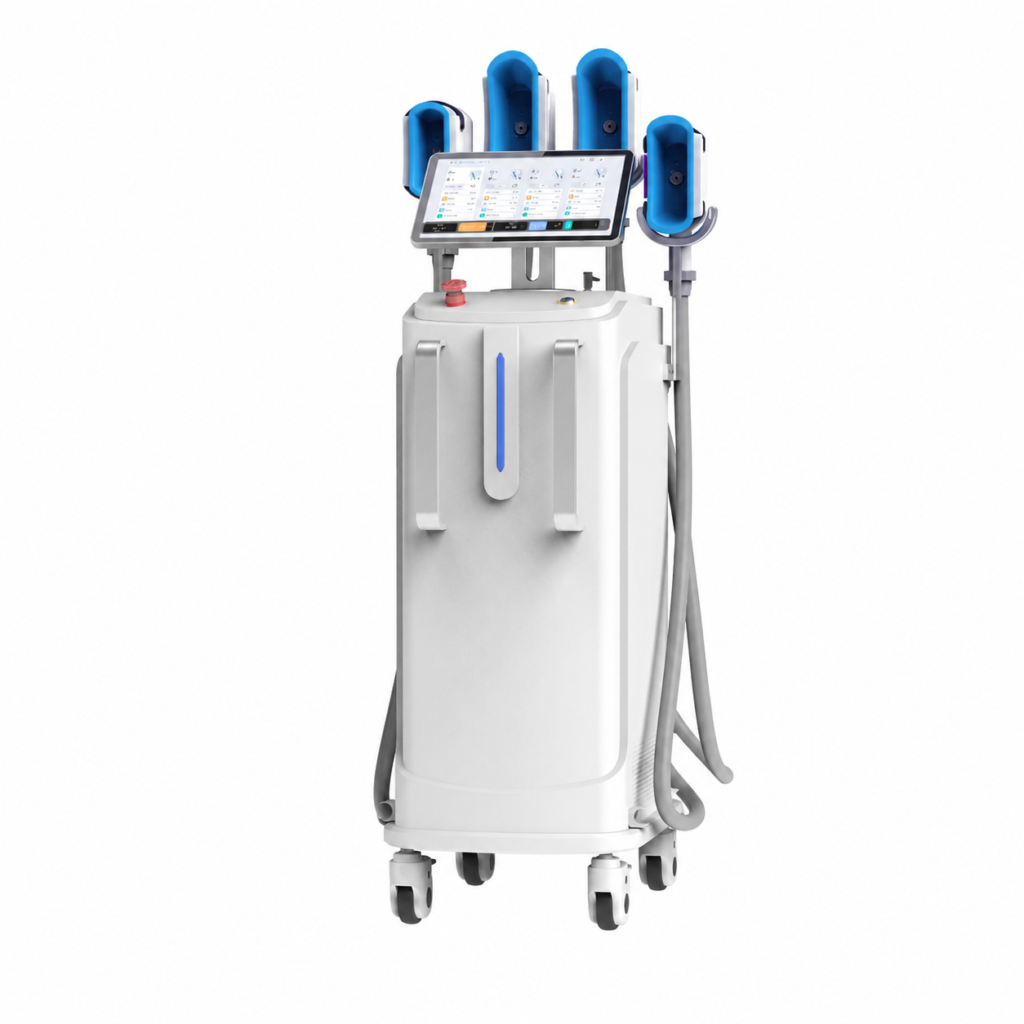
A device like the CryoDefine cryolipolysis device works with controlled cooling and is equipped with four handpieces that you can use separately or simultaneously, so you can treat multiple zones in a single session. Points to look out for with cryolipolysis:
- Treatment duration: a session per zone quickly takes up a longer period of time, so plan it well in your schedule.
- Results over time: the effect becomes visible in the weeks after the treatment, because the removal is gradual. Manage your client’s expectations accordingly.
- Comfort and safety: work with clear protocols and a thorough intake, so you know which client the treatment is suitable for.
EMS: muscle building and fat reduction in one
EMS stands for electrical muscle stimulation. Where cryolipolysis focuses on fat, EMS activates the muscle tissue. Through electromagnetic impulses, intensive muscle contractions are induced, far stronger than what a client can achieve through training on their own. The body responds to those contractions with muscle building, and some systems combine that with techniques that also support fat reduction.
This makes EMS attractive for a specific client need: more definition and firmness, for example a tighter stomach or a lifting effect on the buttocks. It is the technique for clients who do not so much want to lose weight, but want to see their body firmer and more defined.
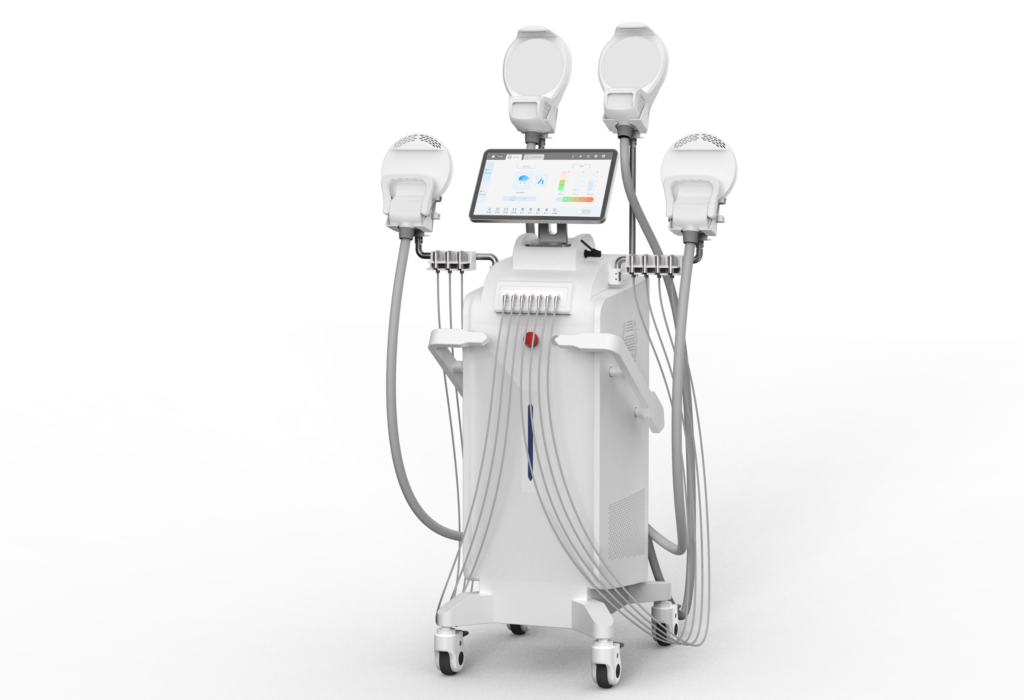
Modern platforms often combine multiple modalities. The Sculptiq 2 EMS body sculpting bundles EMS with additional technology and delivers no fewer than eleven handpieces, some for the body and some for the face. This means that with a single device you can include both body sculpting and facelifting in your menu, which increases the utilisation rate of your investment. With EMS, pay particular attention to:
- Versatility: a platform that handles facial treatments alongside the body gives you more treatment options per client.
- Guided protocols: equipment with pre-programmed treatment modes shortens the learning curve for your team.
- Positioning: EMS appeals to a different, often more sporty audience than classic slimming treatments. Keep that in mind in your marketing.
Vacuum and roller: cellulite, connective tissue and skin improvement
The third route is vacuum, usually combined with mechanical rollers. Here the skin is suctioned up between rollers and worked. This massages the connective tissue, stimulates lymphatic drainage and tackles the typical orange-peel effect of cellulite. Vacuum-roller treatments feel to the client like a firm, technical massage and are popular for their comfort and relaxing character.
Many vacuum systems today are multi-technology platforms. The Formea Pro vacuum roller combines vacuum suction and mechanical rollers with additional techniques such as radiofrequency and cavitation, and can be used on both the body and the face. Such an all-in-one approach means you serve different client needs, from cellulite to skin firming, with a single device.
A practical consideration with vacuum-roller treatments is hygiene and maintenance: oils and creams are involved. Equipment with an integrated cleaning system saves your team time between treatments and keeps the workload manageable in a busy salon.
How do you choose the right technique for your salon?
The choice does not start with the device, but with your client. Ask yourself what the people who walk into your salon most often ask for. If they come to get rid of stubborn fat zones, cryolipolysis is the obvious choice. If they ask for more firmness and definition, EMS is a better fit. If it is mainly about cellulite, smoother skin and relaxation, then vacuum with roller is a logical start.
For many salons the reality is that clients have mixed wishes. That is why entrepreneurs increasingly opt for multifunctional platforms that bundle multiple technologies in a single device. That has three advantages:
- More revenue per square metre: a single device that treats both body and face pays for itself faster than three separate devices.
- A broader menu: you can put together packages and treatment courses that combine different techniques, which increases client value.
- An easier learning process: equipment with guided treatment modes and clear operation lowers the threshold for your team.
When purchasing, also pay attention to the practical matters that determine your daily work: the number and type of handpieces, the user-friendliness of the controls, the space and weight of the device, the warranty terms and the availability of training and support. A good supplier thinks along with you about how the equipment fits into your way of working, not just about the sale.
Conclusion
Cryolipolysis, EMS and vacuum are not competitors but complementary techniques, each with its own purpose: targeted fat reduction, muscle building and definition, or skin improvement and tackling cellulite. Those who know which need most often lands on the treatment table can build an offering that makes sense and invest in equipment that fits it. Whether you start with one targeted technique or immediately opt for a versatile platform, a well-considered choice lays the foundation for a body contouring offering that keeps your clients coming back.
Frequently asked questions
What exactly is body contouring in your salon?
Body contouring is an umbrella term for non-invasive treatments that improve the body's contour, without surgery, downtime or needles. This can be done in three ways: by targeting fat cells, by activating muscle tissue, or by making the skin and connective tissue firmer and smoother. It works best for clients with a stable weight who want to refine stubborn zones, and it is not a replacement for healthy weight management.
What is the difference between cryolipolysis, EMS and vacuum?
They are three different technologies, each addressing a different problem. Cryolipolysis uses controlled cooling for targeted fat reduction in defined fat deposits, EMS activates muscle tissue through electrical muscle stimulation for more firmness and definition, and vacuum with rollers massages the connective tissue, stimulates lymphatic drainage and tackles cellulite and the skin. They are not competitors but complementary techniques, each with its own goal.
Which client is cryolipolysis suitable for?
Cryolipolysis is suitable for clients with clearly defined fat deposits, such as a small belly, love handles, the thighs or a double chin. It is not a whole-body slimming treatment, but a targeted approach for zones that are hard to lose through diet and exercise. The effect becomes visible gradually in the weeks after the treatment, so it is important to manage your client's expectations accordingly.
How do you choose the right body contouring technique for your salon?
The choice does not start with the device, but with your client: look at what the people walking into your salon ask for most often. If they come for stubborn fat zones, cryolipolysis is the obvious choice; if they ask for firmness and definition, EMS fits better; if it's about cellulite, smoother skin and relaxation, vacuum with rollers is a logical start. Because many clients have mixed wishes, business owners increasingly choose multifunctional platforms that bundle several technologies in a single device.