
A headspa treatment lives and dies by the details. The bed and the wash unit form the foundation, but it is the small tools in your hands that make the treatment feel like a true ritual. The right headspa accessories determine how deeply you can work the scalp, how relaxed the client lies on the table and how consistent your result is, treatment after treatment. For salons that offer headspa seriously, it pays to assemble the complete toolkit thoughtfully rather than making piecemeal purchases.
In this guide we walk through the three building blocks of a complete headspa toolkit: brushes, masks and the supporting accessories. The goal is not to lay out as many products as possible on your workstation, but to choose a set that complements one another, is hygienic to maintain and suits the type of treatment you offer.
Why the right headspa accessories make the difference
The value of a headspa lies largely in the tactile experience. A client pays for calm, touch and the feeling that the scalp is being worked on skilfully. With the right tools you can shape that experience: a brush that distributes foam evenly, a mask that cools the eyes during the processing time, a comb that releases tension along the cranial sutures. Each one a small intervention that together makes the difference between a wash-plus and a fully fledged treatment.
For the salon itself, good headspa accessories serve a second function: consistency. When every team member works with the same professional set, you deliver a recognisable result. That makes your treatment easier to train, to repeat and to sell as a fixed part of your menu. Investing in solid tools is therefore just as much an operational choice as an experiential one.
Brushes: the heart of the treatment
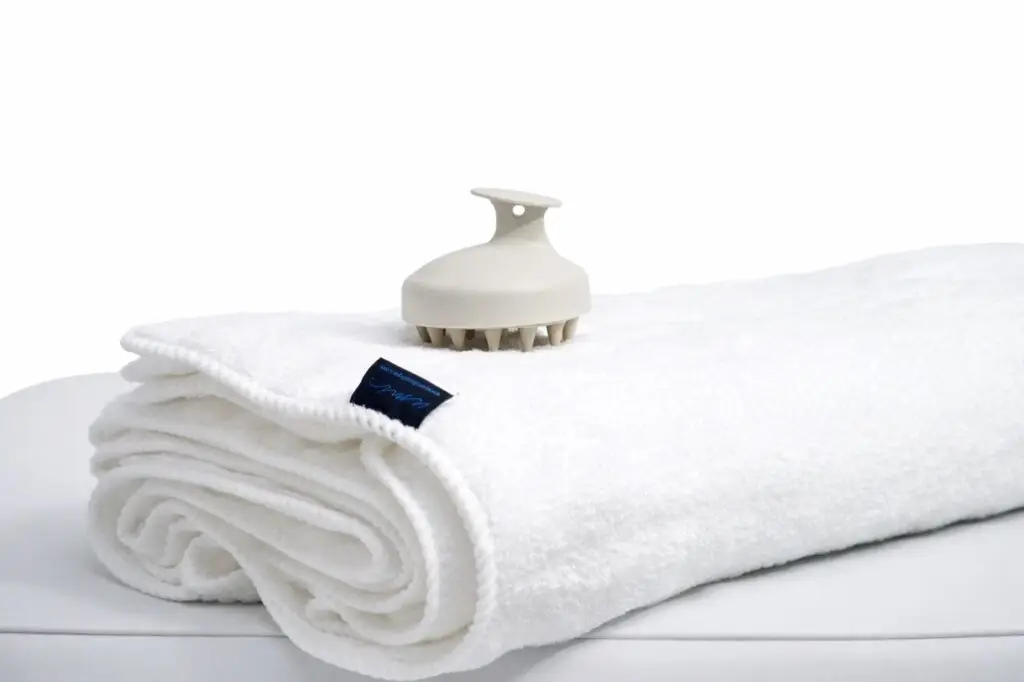
The brush is by far the most used tool during a headspa. It distributes cleansing products, massages the scalp and stimulates blood circulation. For most treatments, a silicone scalp brush forms the logical foundation. The flexible bristles cleanse the scalp thoroughly, remove sebum and product residue and at the same time provide a pleasant massaging stimulus. Because silicone is easy to disinfect, a scalp brush also fits well with the hygiene requirements that apply in a professional salon.
Alongside the silicone version, it is worthwhile to keep a wooden option on hand for the dry part of the treatment or for clients who prefer a firmer, more natural feel. The wooden head massage combs release tension along the cranial sutures and at the temples, and lend themselves excellently to a calm closing massage in which you detangle the hair at the same time. By combining a silicone brush with a wooden comb, you give each phase of the treatment the right tool.
What to look for when choosing brushes
- Cleanability: choose materials you can disinfect quickly and thoroughly between clients.
- Grip: the brush should sit comfortably in the hand, even after a long day of treatments.
- Bristle flexibility: too stiff feels unpleasant, too soft cleanses insufficiently. The balance determines the experience.
- Application: wet cleansing calls for a different tool than a dry closing massage.
Equipment: massage without tired hands
Manual massage remains the core of the craft, but electric support offers two clear advantages in practice. First, a device delivers an even, repeatable stimulus that is hard to sustain by hand for minutes on end. Second, it relieves your team members’ wrists and hands, which makes a serious difference to their workload and health over a full schedule.
An electric head massage device with rotating massage heads stimulates the scalp and relieves tension, and in many cases can also be used on the neck, shoulders and upper back. In this way you naturally extend the treatment and offer the client a more complete moment of relaxation. It is important to view equipment as a complement to, not a replacement for, the manual technique: the combination of human touch and consistent mechanical stimulus gives the most complete result.
Masks and comfort: the calm during the processing time
During a headspa there are always moments when a product needs to take effect or when you are not actively massaging. It is precisely those moments that determine whether a treatment is experienced as luxury or as waiting time. This is where comfort accessories come into play. A cooling eye mask is the strongest example of this: it shields out light, relaxes the area around the eyes and gives the client an immediate signal that it is time to let go.
A jade eye mask adds a cooling element to that which many clients find especially pleasant, certainly after a day behind the screen. It is a small accessory with a big effect on the experience, and it costs you barely any extra steps during the treatment. For salons that want to take their headspa to a higher experiential level, details like these are often the difference between satisfied and genuinely impressed.
Don’t forget the supporting basics
Alongside brushes, equipment and masks, a smooth treatment leans on a number of indispensable basic items. Always keep these well stocked so you never have to improvise:
- Towels and cape: clean, dry and within reach, ready for every client.
- Bowls and dosing bottles: for neatly measuring out oil, mask and cleanser.
- Disinfectant: for cleaning brushes and heads between treatments.
- Neck roll or support: for extra comfort during the processing time.
Assembling your toolkit smartly
A complete toolkit does not have to be large, but it does have to be well considered. Start with the core: a silicone brush for wet cleansing and a wooden comb for the dry massage. Then add a massage device as soon as your treatment volume grows and the strain on your team’s hands increases. Round it off with comfort accessories such as an eye mask, which deepen the experience without drastically changing your way of working.
When assembling, also think about maintenance and lifespan. Tools you can clean well last longer and keep your hygiene up to standard. Plan the replacement of wear-prone parts ahead of time, so you never run out halfway through the week. And tailor your toolkit to the treatments you actually offer: a salon focused on deep relaxation makes different choices than a hair salon offering headspa as an upgrade to the wash.
In closing
The right headspa accessories turn a treatment into an experience that clients remember and recommend. By deliberately combining brushes, equipment and comfort accessories, you build a toolkit that not only works pleasantly, but also keeps your result consistent and relieves your team. Start with the basics, expand at the pace of your salon and choose tools you will continue to enjoy using for years. This is how headspa becomes a fixed, recognisable part of what sets your salon apart.
Frequently asked questions
Which headspa accessories do you need for a complete toolkit?
A complete headspa toolkit rests on three building blocks: brushes, equipment and masks, supported by essential basics such as towels, dishes, disinfectant and a neck roll. The aim is not to pile as many products as possible onto your worktop, but to choose a set that complements itself, is hygienic to maintain and fits the type of treatment you offer. Start with the core and expand at the pace of your salon.
Which brush is best for a headspa treatment?
For most treatments a silicone scalp brush is the logical base: its flexible nubs clean the scalp thoroughly, remove sebum and product residue and give a pleasant massage stimulus, while silicone is easy to disinfect. It is also valuable to keep a wooden comb on hand for the dry part of the treatment, which releases tension along the cranial seams and detangles the hair. By combining both, you give every phase of the headspa the right tool.
Do you need an electric scalp massage device for a headspa?
Manual massage remains the heart of the craft, but an electric scalp massage device with rotating heads has two clear advantages: it delivers an even, repeatable stimulus that is hard to sustain by hand for minutes on end, and it relieves your staff's wrists and hands across a full schedule. Such a device can in many cases also be used on the neck, shoulders and upper back, naturally extending the treatment. See it as a complement to, not a replacement for, the manual technique.
What do you use an eye mask for during a headspa?
During a headspa there are always moments when a product needs to take effect or when you are not actively massaging, and it is precisely those moments that determine whether a treatment feels like luxury. A cooling eye mask blocks out light, relaxes the area around the eyes and immediately signals to the client that it is time to let go. A jade eye mask adds a cooling element that many clients find especially pleasant, particularly after a day behind a screen. It is a small accessory with a big effect on the experience.