
In a short space of time, the Japanese headspa has evolved from a niche treatment into a firm fixture in many European salons. Clients are looking for more than just a cut or colour: they want relaxation, attention for their scalp and a moment of calm. For salon owners, this represents an attractive opportunity to expand the treatment menu with a service that scores highly on experience and repeat visits. Anyone who wants to start a headspa in the salon, however, faces a number of practical choices: which space, which equipment, which treatments and which business model fit best? This guide takes you step by step through the entire process, so you can make a well-considered decision.
Why starting a headspa in your salon is a strong choice
A headspa combines cleansing and care of the scalp with a distinct wellness experience. The treatment appeals to a broad target group: from clients with a dry or irritated scalp to people who are simply looking for deep relaxation. For a salon, this is interesting because it positions you in the higher segment and sets you apart from businesses that offer cutting and colouring services only.
In addition, a headspa lends itself perfectly to repeat appointments. Scalp care is not a one-off treatment but a routine, and that makes it possible to build up regular treatment programmes and subscriptions. Finally, a headspa ties in seamlessly with the sale of hair and scalp care, allowing you to increase your average spend per client. So anyone thinking about starting a headspa in the salon is investing not just in a service, but in a complete experience concept centred on the client.
The space: what do you need?
A headspa calls for a quiet, secluded spot. The strength of the treatment lies in the experience, and that stands or falls with the atmosphere. Ideally, you set up a separate room or a partitioned-off corner, away from the bustle of the wash basins and styling chairs. Think dimmed lighting, neutral colours, soft music and a pleasant temperature.
Points to consider for the layout
- Water supply and drainage: most headspa treatments work with a special rinsing system. Make sure your plumbing and drainage are set up for this before you install equipment.
- Client comfort: the client lies in the same position for a longer period. A well-supporting treatment bed is crucial for the experience.
- Room to move for the practitioner: allow for sufficient space around the bed so you can work ergonomically.
- Storage: you want products, towels and accessories within reach but out of sight.
The equipment: the heart of your headspa
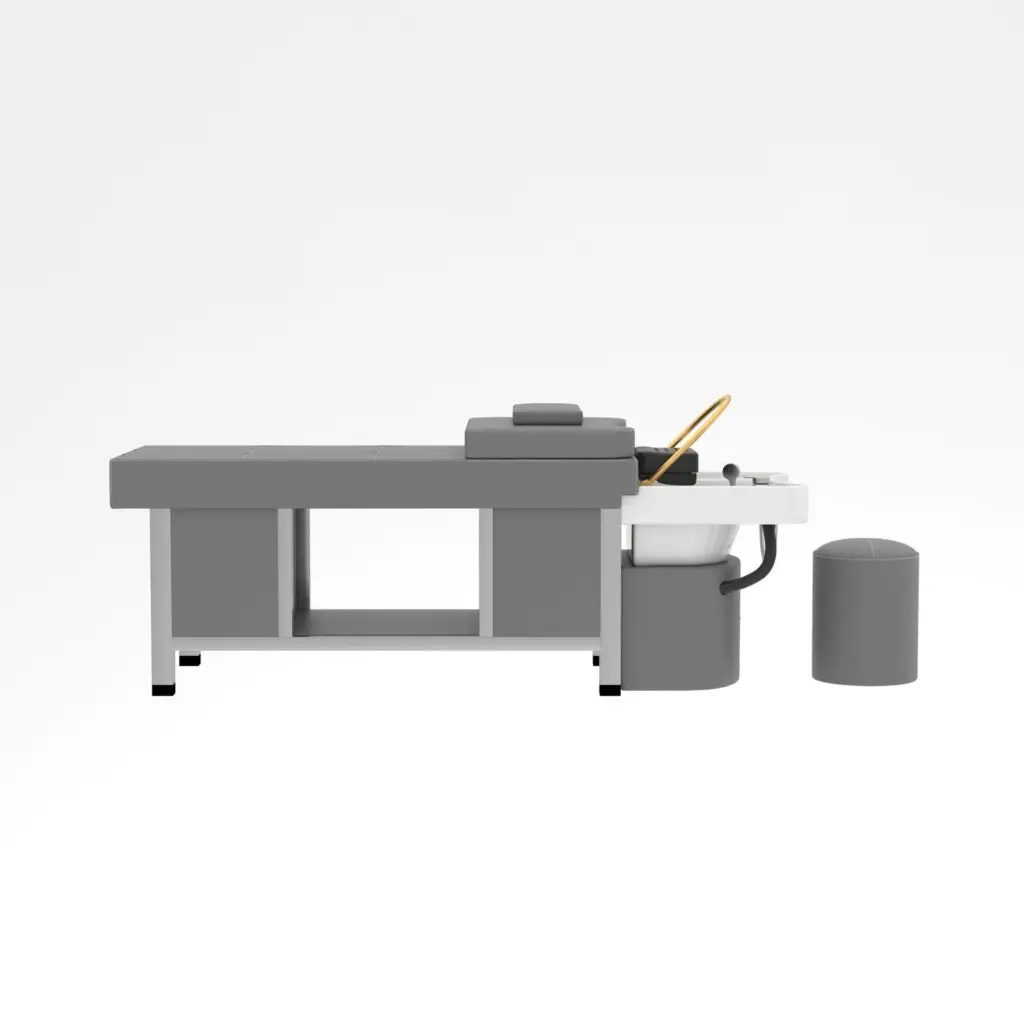
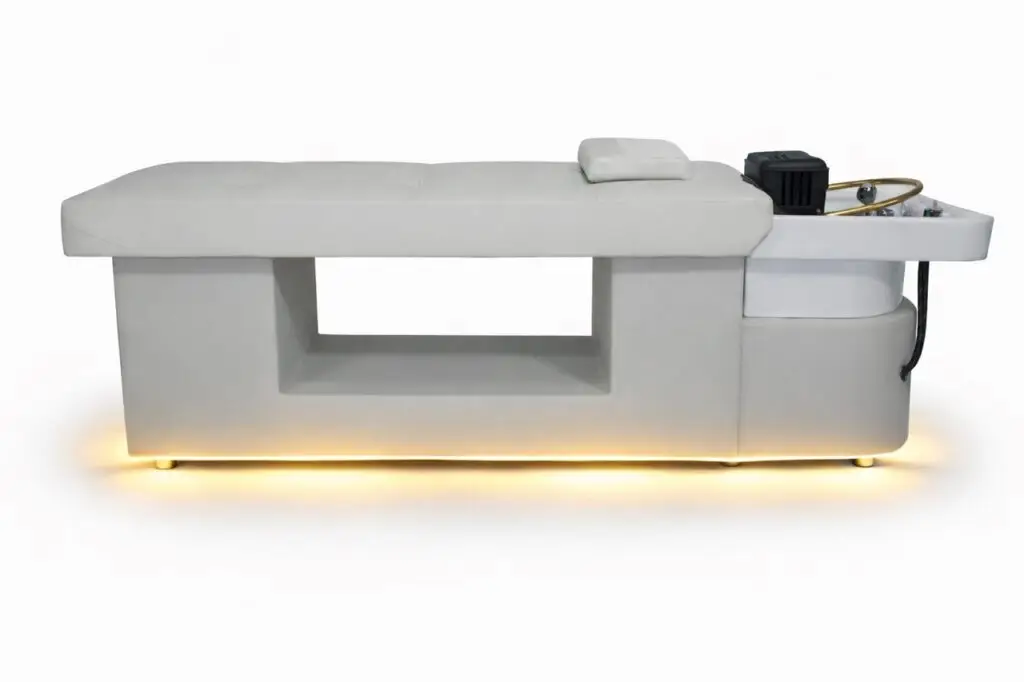
The choice of your equipment largely determines the quality and the appearance of your treatments. The central element is the headspa bed: a treatment bed with an integrated rinsing and care system that allows you to cleanse the scalp thoroughly without the client having to get up.
Fixed headspa beds
For salons that want to offer the headspa as a full-fledged part of the menu, a fixed treatment bed is the logical investment. A model such as the UMI Headspa bed ‘Nava’ gives the client a comfortable reclining position and gives the practitioner the control needed for a professional treatment. If you want to focus on maximum experience and appearance, the UMI Headspa bed ‘Halo’ is a worthwhile option to consider. Both beds form the backbone of a serious headspa practice.
Starting out mobile
Not every salon wants to, or can, free up a space for a fixed bed straight away. If you want to test the market first or offer treatments on location, a mobile solution such as the UMI Portable Headspa ‘Luma’ is an accessible way to start. This way, you can experience with a lower threshold whether the headspa catches on with your client base, before you invest in a full set-up.
Putting together the treatment menu
A well-thought-out treatment menu helps you serve different client needs and increase your average spend. Preferably, build your menu in recognisable tiers: a short introductory treatment, an extensive signature treatment and additional modules that clients can add on.
Building blocks for your treatments
- Cleansing of the scalp: the foundation of every headspa, aimed at removing sebum and product residue.
- Massage: a thorough scalp and neck massage strengthens the relaxation effect and, for many clients, is the decisive reason to come back.
- Exfoliation and stimulation: aids such as a scalp brush support the cleansing and give the treatment a tangible, professional added value.
- Additional care: for a premium appearance, you can add a module with an LED mask, which makes the treatment visually distinctive.
By combining modules cleverly, you create upgrade options without having to design a completely new protocol for each client. That makes your planning simpler and your margin more predictable.
Training and protocols
Good equipment is half the story; the other half is the execution. The results and the experience of a headspa stand or fall with the skill of the practitioner. So invest in training, either through an external course or by setting down internal protocols.
For each treatment, set down which steps you go through, how much time each step takes and which products you use. Clear protocols ensure consistency between practitioners and make it easier to train new staff. Hygiene also deserves explicit attention: draw up clear cleaning routines for the bed, the accessories and the workspace between clients.
The business model: returns and pricing
A headspa is a time-intensive treatment, and that should be reflected in your price. Determine your rate based on the treatment time, the use of equipment and products, and the positioning you are aiming for. Because a headspa sits in the experience segment, clients are generally willing to pay a premium for quality and calm.
Ways to strengthen your returns
- Treatment programmes: offer a series of treatments as a package, so clients commit to multiple visits.
- Retail sales: also sell the scalp care you use during the treatment for home use.
- Combinations: pair the headspa with existing services such as cutting or colouring to increase the spend per visit.
- Gift vouchers: a headspa lends itself perfectly as a gift, which brings new clients to your salon.
A phased approach that works
You don’t have to do everything at once. A sensible approach is to start in phases. Begin with a limited offering, for example a mobile set-up or a single treatment bed, and build up your menu and your regular client base at a calm pace. Gather feedback, refine your protocols and only expand with extra equipment or modules when demand justifies it. This way, you keep your investment manageable and give yourself the room to truly master the service.
Conclusion
Adding a headspa to your salon is a well-considered step that fits the growing demand for experience and scalp care. With the right space, reliable equipment, a clear treatment menu and good protocols, you lay a foundation that translates into satisfied clients and repeat visits. Whether you want to start big with a fixed treatment bed or first explore the market with a mobile solution: by working step by step, you give your headspa the best chance to grow into a firm fixture within your salon.
Frequently asked questions
What do you need to start a headspa in your salon?
To start a headspa you mainly need a calm, screened-off space, ideally a separate room or corner away from the wash basins and styling chairs. Key requirements are suitable water supply and drainage for the rinsing system, a well-supporting treatment bed, enough room to work ergonomically, and storage within easy reach. The right equipment and clear treatment protocols are also essential.
Can you start small with a headspa, or do you need a fixed treatment bed right away?
You don't have to set everything up at once. A sensible approach is to start in phases: for example, begin with a mobile solution or a single treatment bed and gradually build up your menu and regular clientele. This lets you test, at a lower entry point, whether the headspa appeals to your clients before investing in a full setup or a fixed bed.
What exactly does a headspa treatment involve?
A headspa combines cleansing and care of the scalp with deep relaxation. The basis is a thorough scalp cleansing aimed at removing sebum and product residue, often supplemented with a scalp and neck massage that enhances the relaxing effect. You can also add modules such as exfoliation and stimulation with a scalp brush, or additional care with an LED mask for a premium feel.
How do you make a headspa profitable in your salon?
Because a headspa is a time-intensive treatment in the experience segment, clients are usually willing to pay a premium for quality and calm. Set your rate based on the treatment time, the use of equipment and products, and your positioning. You can strengthen returns with treatment series sold as packages, retail sales of scalp care for home use, combinations with cutting or colouring, and gift vouchers that attract new clients. Scalp care also lends itself well to repeat appointments and subscriptions.