
In a short time, headspa has grown from a niche treatment into a service that clients actively seek out. For salons, hairdressers and beauticians, that raises one concrete question: what is the headspa treatment cost on the provider’s side, and does enough margin remain at the bottom line to seriously add it to your menu? In this overview, we break down the cost side into recognisable items and set them against what a treatment can realistically generate — without empty promises, but with a workable framework.
Which cost items determine the headspa treatment cost?
To get a grip on your return, it helps to divide the costs into two groups: one-off investments and recurring costs per treatment. Both count, but they behave differently. A one-off investment is spread across hundreds or thousands of treatments, whereas a recurring cost item weighs on your margin again with every appointment.
One-off investments
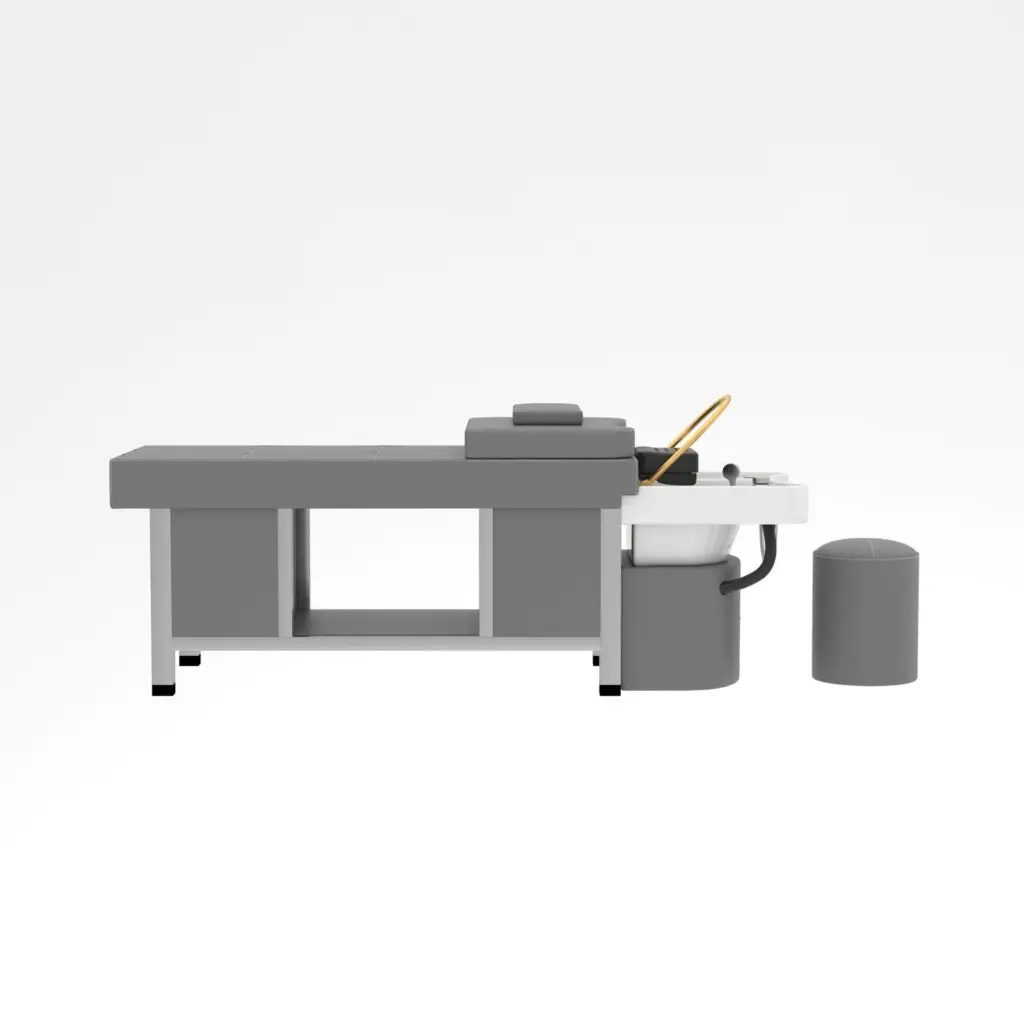
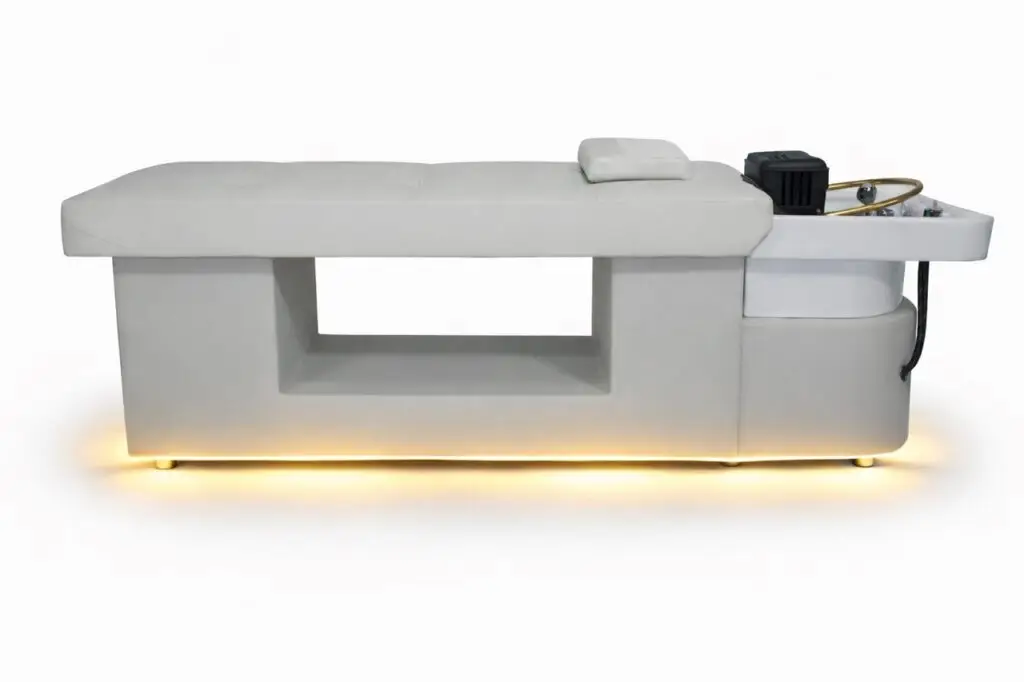
The biggest item up front is usually your treatment furniture. A fixed headspa bed with an integrated wash unit is the heart of the treatment and largely determines the experience your client has. On top of that come smaller one-off expenses for the setup: ambient lighting, sound, towels, a work stool and possibly adjustments to your space.
It pays to think carefully here about the nature of your salon. If you have a fixed treatment spot and run volume, then a robust, comfortable bed such as the UMI Headspa bed ‘Nava’ is a logical foundation. If you want an even more luxurious positioning with a rate to match, then a model like the UMI Headspa bed ‘Halo’ suits that story better. The investment is higher, but you are also selling a higher-quality experience.
Recurring costs per treatment
For each treatment you incur costs for consumables: scalp and hair products, water, energy for heating and lighting, and laundering of towels and linen. These are relatively manageable amounts, but they add up as your calendar fills. The largest recurring item is almost always your own time or that of your employee — and it is precisely that time from which the treatment derives its value.
Investment versus return: how to do the maths
The tipping point lies in the ratio between your one-off investment and the number of treatments across which you spread it. Treatment furniture is not a cost item you recoup in a single month, but a business asset that lasts for years. So don’t calculate per month, but over its lifespan.
The calculation is simpler than it seems:
- Set your treatment rate based on duration, experience and your local market — not on what it costs you.
- Subtract the direct costs per treatment: products, water, energy, laundry and possibly staff.
- What remains is your gross margin per treatment. That amount first covers your one-off investment, and after that it is profit.
- Divide your investment by that margin and you’ll know how many treatments you need to break even.
The beauty of a headspa treatment is that the direct costs per session are low relative to the rate clients are willing to pay for it. The margin lies largely in the experience and the time, not in expensive consumables. As a result, the break-even point shifts in your favour faster than with treatments that carry high product costs.
Three factors that make or break your margin
Occupancy rate
Treatment furniture that sits idle earns nothing back. Occupancy is therefore the most important lever under your return. Linking treatments to existing services — for example offering a scalp treatment alongside a cut or colour appointment — fills your calendar without your having to recruit new clients. Anyone just starting out, or who wants to test demand first, can keep the threshold low with a UMI Portable Headspa ‘Luma’: it works without a fixed water connection, allowing you to switch flexibly between rooms and start without any renovation.
Positioning and rate
Headspa lends itself perfectly to premium positioning, because the value for the client lies in relaxation and experience — not in a measurable product they take home. A calm space, a comfortable bed and a well-cared-for ritual justify a higher rate than the pure time would suggest. If you invest in an appearance that supports that rate, the investment pays for itself through a higher margin per treatment.
Repeat visits and upselling
The real profit of a headspa service rarely lies in the first treatment. Clients who experience relaxation as a recurring ritual book again — and that makes the customer value over a year far higher than a single one-off appointment. On top of that, a headspa treatment opens the door to selling scalp and hair care for home use, which further increases your margin per client.
Fixed bed or mobile solution: which suits your cost picture?
The choice between a fixed and a mobile system has a direct impact on your headspa treatment cost and your flexibility. A fixed bed calls for a larger one-off investment and, ideally, a dedicated spot, but delivers the most complete experience and the highest comfort. That suits salons that run volume and want to anchor headspa as a permanent pillar in their offering.
A mobile solution lowers the entry costs and the structural requirements. You can switch between rooms more easily, offer the treatment during quiet moments, or validate demand first before investing in a fixed installation. For anyone testing the market or working in a compact space, that shifts the cost-benefit trade-off favourably: a lower threshold, a faster payback time, and the option to upgrade to a fixed bed later when the calendar justifies it.
Whichever way you go — the logic stays the same. You weigh a one-off investment against the margin you build up across many treatments. The lower your direct costs per session and the more consistent your occupancy, the more attractive the picture.
Conclusion
What a headspa treatment costs to offer is ultimately less decisive than the ratio between your investment, your occupancy and your rate. The direct costs per treatment are manageable, while the value for the client — and with it your margin — lies mainly in experience and repeat visits. Start with an honest calculation over the lifespan of your furniture, choose a setup that suits your space and ambition, and let occupancy do the work. Then headspa becomes not only a sought-after service, but a profitable one too.
Frequently asked questions
What costs does a headspa treatment have for the salon?
It is best to split the costs into two groups: one-time investments and recurring costs per treatment. The largest one-time item is usually your treatment furniture, complemented by interior elements such as ambient lighting, sound, towels and a work stool. Per treatment you pay for consumables such as scalp and hair products, water, energy and laundry, but the largest recurring item is almost always your own time or that of your employee.
How do you calculate what you earn from a headspa treatment?
First set your treatment rate based on duration, experience and your local market, not on what it costs you. Then subtract the direct costs per treatment, such as products, water, energy, laundry and any staff; what remains is your gross margin per treatment. Next, divide your one-time investment by that margin and you know how many treatments you need to break even. Calculate this over the lifespan of your furniture, not per month.
Which factors determine the margin of a headspa treatment?
Three factors make or break your margin. Occupancy rate is the most important lever, because furniture that stands idle earns nothing back; you fill your schedule, for example, by linking a scalp treatment to a cut or colour appointment. In addition, headspa lends itself well to premium positioning, because the value lies in relaxation and experience, which justifies a higher rate. Finally, repeat visits and the upsell of scalp and hair care for home use make the customer value over a year much higher than a single appointment.
Do you choose a fixed headspa bed or a mobile solution?
A fixed bed requires a larger one-time investment and ideally a dedicated spot, but delivers the most complete experience and the highest comfort; this suits salons that run volume and want to anchor headspa as a permanent pillar. A mobile solution lowers the entry costs and the structural requirements, making it easier to switch between rooms or to validate demand first. For those testing the market or working in a compact space, this means a lower threshold and faster payback, with the option to upgrade to a fixed bed later.