
The layout of your salon is not a matter of taste alone. Every chair, stool and bench helps determine how smoothly your team works, how long your clients stay comfortably seated and what impression your business leaves behind. Anyone setting up a salon is in fact investing in years of daily use: furniture that is adjusted in height ten times a day, treatments that sometimes last an hour and a waiting area that creates the first impression. In this guide we walk through the layout logically, from the treatment chair as the heart of your business to the waiting bench by the entrance, so you make well-founded choices that will last for years.
Why a well-chosen treatment chair set-up pays off
Setting up a salon well is a balance between three interests: your client’s comfort, your team’s ergonomics and the efficiency of your space. These three are constantly interconnected. A treatment chair that does not lower far enough forces your staff member into an awkward posture. Walking space that is too tight between workstations slows down the flow. And an impersonal waiting corner makes clients walk in with a lukewarm feeling.
So do not start with the individual pieces of furniture, but with your workflow. How many treatment spots do you need? Which services determine your revenue: cutting, colouring, skin treatments, headspa or a combination? And how does a client move through your business: from entrance to waiting area, to the washing station, to the workstation and back again? Only once that route is clear can you choose the right furniture for each zone. This prevents you from having to shuffle expensive purchases around afterwards.
Floor plan and zoning first
Divide your space into functional zones: reception and waiting, treatment or barber workstations, a washing or rinsing zone and possibly a separate room for specialist treatments. Allow enough room to move around each workstation, so your team can work all around the chair and has space for a trolley or equipment. Also consider the sightlines: a pleasant salon feels spacious and orderly, not crammed.
The treatment chair: the heart of your salon set-up
No single piece of furniture shapes the working experience as strongly as the chair your client sits in. Anyone setting up a salon is best to choose this first, because the rest of the workstation is organised around the chair. Two questions guide your choice: which treatments do you perform and how much versatility do you need?
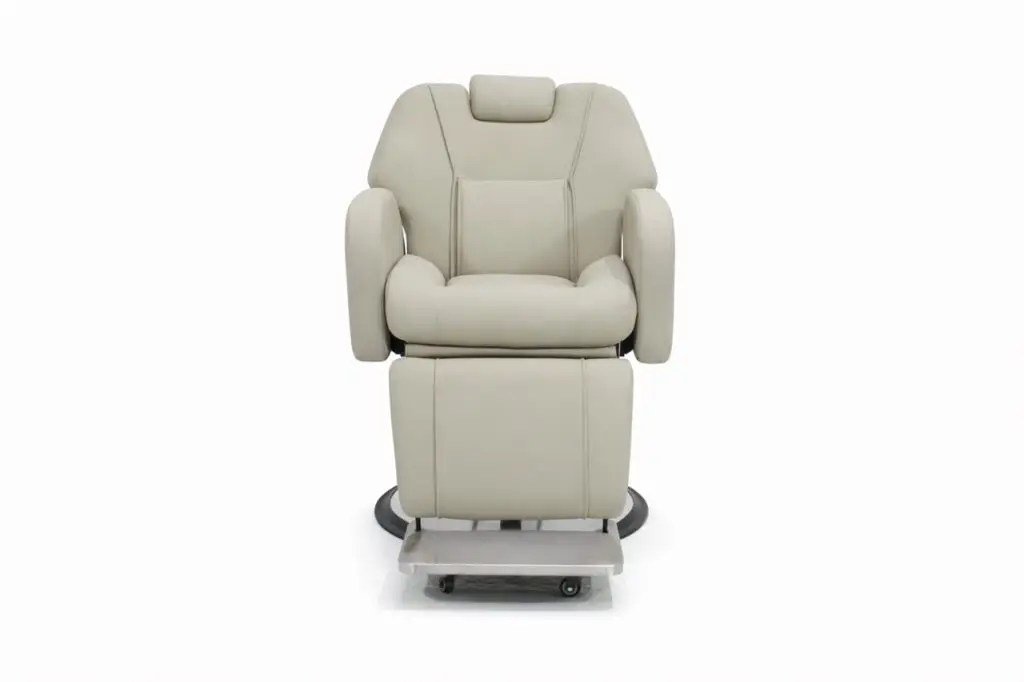
For businesses that combine barbering and beauty work, a versatile chair with an adjustable backrest is often the smartest foundation. The UMI ProAdjust treatment and barber chair is a good example of this: upright it serves as a classic barber chair, while the fully reclining backrest makes it suitable for lying-down treatments and even headspa. One chair that fulfils two functions saves space and investment, certainly in a smaller salon where every square metre counts.
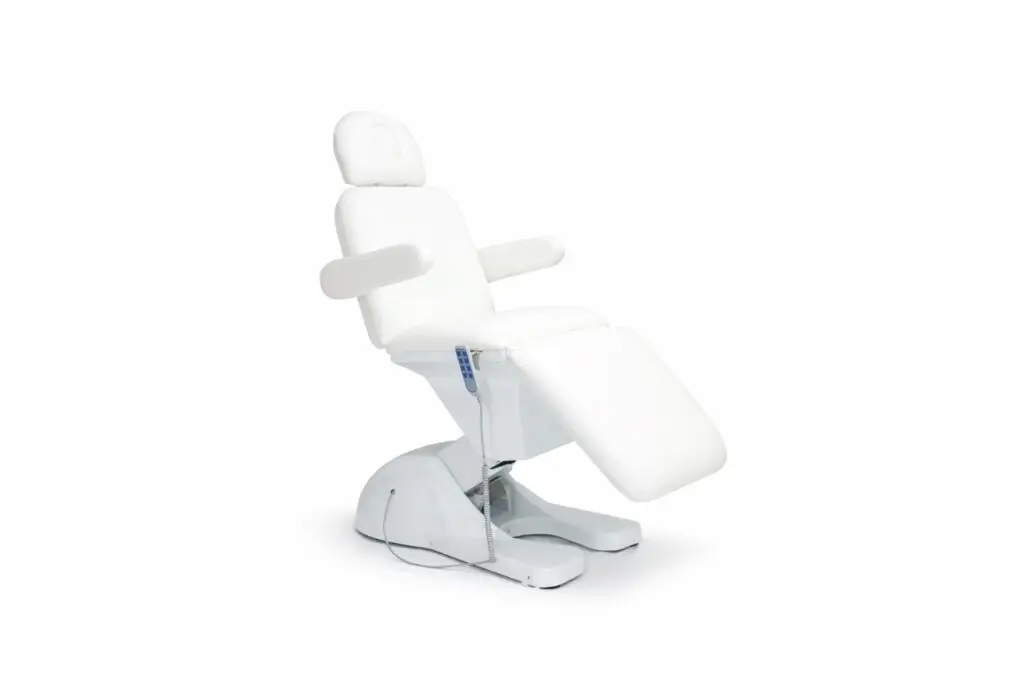
If you focus on in-depth skin or body treatments, a full-fledged, electrically adjustable treatment chair is worthwhile. The UMI Harmony 4 treatment chair with four motors lets you set the back, leg rest, seat height and tilt independently. For longer treatments that is no luxury: the client is positioned optimally and your specialist works without bending or reaching. A chair that adapts to every treatment increases both quality and comfort and radiates professionalism.
Barber chair with character
If you work in a classic barbershop, the layout calls for a recognisable, comfortable barber chair that underlines your style. The Ayala Barber Chair Thomas combines a sturdy appearance with everyday ease of use and fits salons that want to radiate warmth and solidity. With every barber chair, pay attention to the hydraulic pump, the swivel and the upholstery: the latter deals daily with hair dye, water and cleaning agents, so choose a material that is easy to keep clean.
Do not forget your team’s ergonomics
When setting up a salon, attention often goes to the client chair, while your team’s health is at least as important. Your staff stand or sit for hours on end in the same posture. A good work stool is therefore not an afterthought, but prevention of back, neck and shoulder complaints that can lead to absenteeism over time.
Choose a stool that is height-adjustable and, depending on the treatment, offers a backrest or saddle shape. The Ayala professional beauty and barber stool H2 is designed for prolonged professional use and lets your specialist work close to the client with good posture. Smoothly rolling wheels are essential here: they let your team move around the chair without standing up each time. Invest deliberately here; a worn or too-low stool reveals itself within a few months in your staff’s shoulders.
Height, mobility and upholstery
Three features make the difference with stools and chairs. Height adjustment must be ample enough to suit every staff member and treatment. Mobility, via sturdy wheels, determines how smoothly one moves around the workstation. And the upholstery must withstand intensive use and remain easy to clean. When in doubt, always ask for the specifications of the load capacity and the type of upholstery before you order.
The waiting area: the first and last impression
The waiting corner is your salon’s calling card. This is where the client forms their first impression and where they wait relaxed, or rather impatiently, for their turn. An inviting waiting bench, ample space and a well-kept appearance immediately set the right tone. Match the style of the waiting area to the rest of your interior, so your business looks like a single whole.
Keep it practical: a waiting bench or chairs that are comfortable to sit on, a small table for a magazine or glass of water, and a clear sightline to reception. Anyone who invests in atmosphere here harvests calm in the client even before the treatment begins. The conclusion counts too: a pleasant place to settle the bill and possibly browse products extends the good feeling right up to the door.
Material, maintenance and expandability
Setting up a salon is an investment for years, so look beyond the purchase price. Pay attention to the quality of the mechanics, the ease of maintenance and the availability of parts. Chairs with motors and hydraulics call for solid technology that can handle daily use. Choose upholstery that you can clean and disinfect quickly, because hygiene is a basic requirement in every salon.
Finally, think about growth. Perhaps you start with two workstations, but want to expand in a year or add an extra treatment service. In that case choose furniture from lines you can add to later, so your salon stays visually consistent. A well-considered foundation makes expanding straightforward instead of a fresh renovation.
Conclusion
Setting up a salon comes down to the right order: start with your workflow, then choose the treatment or barber chair as the heart of every workstation, ensure ergonomic seating comfort for your team and turn the waiting area into a warm first impression. Anyone who works through these steps calmly and opts for solid, low-maintenance furniture lays a foundation that both clients and staff will enjoy for years. Take the time to compare and, when in doubt, feel free to ask for advice or a demonstration before you decide.
Frequently asked questions
Where do you start when setting up a salon?
Don't start with individual pieces of furniture but with your workflow. Decide how many treatment spots you need, which services drive your revenue and how a client moves from the entrance to the waiting area, the wash station and the workspace. Then divide the space into functional zones so you can choose the right furniture per zone and avoid having to rearrange costly purchases later.
Which treatment chair should you choose for your salon?
The choice depends on two questions: which treatments you perform and how much versatility you need. If you combine hairdressing and beauty work, a versatile chair with an adjustable, reclining backrest is often the smartest base, because upright it serves as a barber chair and reclined it suits treatments and headspa. If you focus on in-depth skin or body treatments, a full electrically adjustable treatment chair pays off, letting you set the back, leg support, seat height and tilt independently.
Why is a good work stool important when setting up a salon?
When setting up, attention often goes to the client chair, while your team's health is at least as important. Your staff stand or sit in the same posture for hours on end, so a good work stool is not an afterthought but prevention of back, neck and shoulder complaints that can eventually lead to absence. Choose a stool that is height-adjustable, has smoothly rolling wheels and, depending on the treatment, offers a backrest or saddle shape, so your specialist works close to the client with good posture.
How do you set up the waiting area of your salon?
The waiting corner is your salon's calling card: here the client forms a first impression and waits for their turn. Keep it practical with a comfortable waiting bench or chairs, a small table for a magazine or glass of water and a clear line of sight to reception. Match the style to the rest of your interior so your business looks like one whole, and also provide a pleasant spot to check out, because that extends the good feeling all the way to the door.